
Autumn is the Algarve’s best-kept secret.
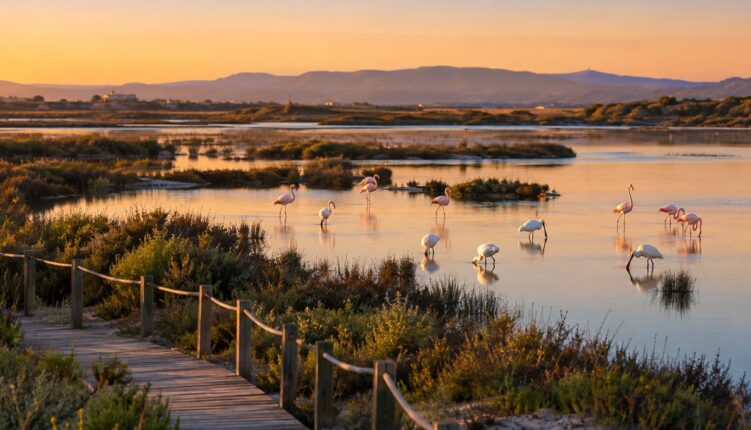
As the summer crowds thin out, the region’s lagoons and estuaries quietly fill with feathers instead. For anyone drawn to autumn birdwatching in the Algarve, now is the perfect moment. September and October sit right on the great migration route between Europe and Africa. As a result, thousands of birds pause along our coast to rest and feed. Few visitors realise it, yet this shoreline becomes a real wildlife haven. Better still, the mild mornings and soft, golden light turn every walk into a pleasure.
Why autumn birdwatching in the Algarve is special
Timing is everything. From late August, waders and terns pass through in growing numbers. Then, through autumn, spoonbills, glossy ibis and elegant flamingos settle in for the cooler months. The quieter shoulder season also brings calmer sites and far fewer people. Consequently, birds feed close to the paths, and photographers enjoy clear, unhurried shots. You need no special gear, either. A simple pair of binoculars and an early start will do nicely. The weather helps, of course. Daytime temperatures stay mild, and rain is still rare in early autumn. Families will find it easy, too, because the walks are flat and gentle.
Three wetlands between Faro and Alvor
Begin in the east at the Ria Formosa, the vast lagoon behind Faro. Its shimmering channels and salt pans draw flamingos, spoonbills and waders right through winter. Next, head to Lagoa dos Salgados, near Armação de Pêra. A 5.5-kilometre boardwalk skirts the marsh, and more than 160 species have been recorded here. Park at Praia Grande, then follow the signed trail. Look out for purple swamphen, glossy ibis and black-winged stilt. Finally, the Ria de Alvor, close to Portimão, offers gentle trails around a tidal estuary. Happily, all three sit within easy reach of our properties, from Salema in the west to Faro in the east.
Making the most of a morning
A few simple habits help enormously. Arrive early, when birds are most active and the light is kind. Move slowly, and pause often. Autumn days are usually calm, yet a light layer is wise for a breezy hide. Remember to bring water, and check the tide for the estuaries. After all, low water pulls the waders in close. Above all, keep your distance, and let the birds settle. A local guide can also help you name the trickier waders. Afterwards, reward yourself with a coffee in a nearby village. In short, it is a gentle, unhurried way to discover another side of the coast. It is also a wonderful reason to visit well beyond the beach.